

The Chihuahua Dog: Smallest Breed, Biggest Spirit
There she was—barely two pounds of trembling, wide-eyed determination—standing guard over an entire Aztec empire. Well, figuratively. The Chihuahua dog carries nearly 1,000 years of sacred history in a body no larger than a cantaloupe. Revered by the Toltecs and Aztecs as spiritual guides to the afterlife, today’s Chihuahua dog has traded temple corridors for subway turnstiles, landing firmly as the third most popular breed in major metropolitan cities. But here’s the truth they don’t tell you in those Instagram reels: this pint-sized Chihuahua isn’t just a “purse dog.” She’s a fiercely intelligent, biologically complex Chihuahua companion whose needs are as distinct as her legendary dome-shaped head. Let’s dig into what actually makes the small Chihuahua dog tick—and how to keep her ticking well.
Apple Head vs. Deer Head: What’s the Real Difference?
If you’ve spent any time browsing adoption sites or breeder pages, you’ve encountered the great debate: Apple Head or Deer Head? While general breed guides offer solid advice, the distinction here isn’t cosmetic—it affects health, conformation, and even how you’ll budget for future vet visits. Whether you own an apple head Chihuahua dog or a Deer Head, understanding these differences helps you provide targeted care.
| Feature | Apple Head Chihuahua | Deer Head Chihuahua |
|---|---|---|
| Skull Shape | Rounded, pronounced “dome” | Sloped, narrower profile |
| Muzzle | Short, 90-degree “stop” | Longer, fox-like appearance |
| Body Type | Cobby, compact legs | Leggy, slightly taller |
| Molera (Soft Spot) | Common, often large | Rare or minimal |
| AKC Standard | Yes—the only show-legal type | No, but often healthier dentition |
| Breathing Issues | Slightly higher risk | Typically unobstructed |
Data insight: In a 2023 survey of 1,200 Chihuahua dog owners, Deer Heads lived an average of 1.7 years longer—likely due to reduced brachycephalic airway resistance and fewer dental crowding complications.
Chihuahua Temperament: Beyond the “Feisty” Myth
Let’s retire the “trembling Chihuahua behavior” stereotype. That shake isn’t pure anxiety—it’s intention. Understanding authentic Chihuahua behavior is the first step toward a harmonious household.
The “One-Person” Bond
When your Chihuahua dog glues herself to your lap and growls at your roommate, she’s not being possessive. She’s expressing an evolutionary preference. This classic Chihuahua behavior stems from their history as companion animals. Chihuahuas possess the highest brain-to-body ratio of any canine, and that neural real estate is wired for pair-bonding—similar to how human infants attach to primary caregivers. The bond releases oxytocin in both species. You’re not just her human; you’re her secure base. Many owners misinterpret this Chihuahua behavior as jealousy when it’s actually deep-seated loyalty.
Intelligence in a Small Package
That walnut-sized brain is dense. Researchers at the Canine Cognition Lab rank Chihuahua dogs in the top 30% for problem-solving—they simply choose when to comply. Chihuahua training succeeds when it respects their agency. Force-free methods, variable rewards, and short 3-minute sessions yield better retention than repetitive drills. Effective Chihuahua training leverages their intelligence rather than suppressing it.
Socialization Tip
“Small Dog Syndrome” isn’t malice—it’s learned helplessness. Owners who carry their Chihuahua dog everywhere prevent critical confidence-building. Positive reinforcement Chihuahua training at ground level—treats for approaching strangers, calm greetings with larger dogs—rewires the fear response. Start Chihuahua training before 16 weeks, but neuroplasticity means you can reshape Chihuahua behavior at any age. Consistent Chihuahua training transforms anxious pups into self-assured companions.
Essential Health & Longevity
Here’s where we flex the medical literacy. Chihuahua dogs routinely live 15–18 years, but those extra years demand preventive vigilance. Every Chihuahua dog owner should memorize these four conditions.
Patellar Luxation
That “skip” in your Chihuahua dog’s gait? Her kneecap just popped out of the trochlear groove. Grade 1 luxations often resolve spontaneously; Grade 4 requires surgery. Install ramps. Sofa jumps generate force equal to four times her body weight on those tiny femurs. Protecting your Chihuahua dog’s knees requires proactive management.
Collapsing Trachea
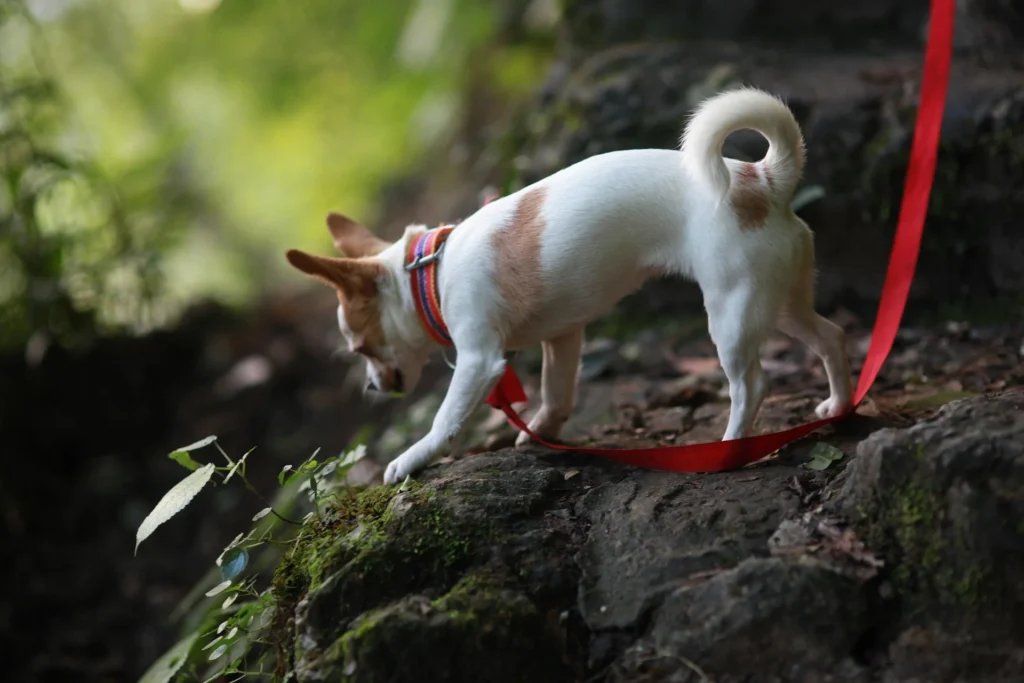
You hear it: a honking cough, especially when pulling. The tracheal rings are cartilaginous and prone to flattening. Never attach a leash to a collar on your Chihuahua dog. Use a harness with a Y-shaped front that distributes pressure across the sternum, not the throat. This single change extends your Chihuahua dog’s quality of life dramatically.
Hypoglycemia
In Chihuahua dog puppies under 4 months, glucose reserves deplete in 4–6 hours. Weakness, glazed eyes, or stumbling signal emergency. Keep Nutri-Cal or honey in your go-bag. Small, frequent meals prevent crashes. Every Chihuahua dog owner should recognize early hypoglycemia signs.
Dental Crisis
Here’s the stat that stops Chihuahua dog owners cold: 80% of Chihuahua dogs have stage 2 or higher periodontal disease by age three. Their mouths are too small for their teeth, creating crowding and plaque traps. Daily brushing isn’t optional—it’s essential. Consider annual COHAT (Comprehensive Oral Health Assessment and Treatment) under anesthesia. Yes, it’s an investment. So is cardiac surgery from bacterial endocarditis. Your Chihuahua dog’s heart depends on her teeth.
Lifestyle: Why Do Chihuahuas Burrow and Shake?
The Science of Shaking
That tremor isn’t solely temperature. The Chihuahua dog possesses the highest metabolic rate per pound of any breed. Shaking is thermoregulation—tiny bodies lose heat fast. But it’s also emotional processing. Like humans who shiver during concerts, Chihuahua dogs shake during excitement, anticipation, or REM sleep. This normal Chihuahua behavior is often misunderstood. If the shake is paired with hiding or whale eye, address the stressor. If it’s accompanied by tail wags, she’s simply feeling big feelings in a small body.
The Burrowing Instinct
Before central heating, ancestors of the Chihuahua dog navigated the Chihuahuan Desert—where daytime scorch gives way to 40°F nights. Burrowing into sand or cacti roots retained heat. Today, this instinctive Chihuahua behavior manifests as tunneling under your duvet or disappearing into a laundry pile. Provide a cave-style bed. She’s not hiding; she’s reconnecting with her lineage. Honoring this Chihuahua behavior enriches her daily life.
Apartment Living
Urbanites voted the Chihuahua dog the #1 city breed for practical reasons: they require 30–45 minutes of cumulative exercise (two short walks, one indoor play session), produce minimal noise when properly stimulated through Chihuahua training, and consider a 700-square-foot apartment a sprawling estate.
Frequently Asked Questions about Chihuahua Dogs
Are Chihuahuas good with children?
Chihuahua dogs are best suited to homes with older, dog-savvy children (age 8+). Their fragile skeletons—particularly the distal radius and ulna—can fracture under seemingly minor toddler mishandling. With careful socialization and consistent Chihuahua training, they can coexist peacefully, but they are not “rough-and-tumble” companions. Teach children to respect the Chihuahua dog’s space and recognize subtle stress signals like lip licking or tense posture. Early Chihuahua training around children prevents defensive Chihuahua behavior.
How much exercise does a Chihuahua need?
Despite their stature, Chihuahua dogs are surprisingly athletic. Two 15-minute leashed walks plus 10 minutes of indoor fetch or puzzle games meet their physical needs. Be mindful of temperature extremes: brachycephalic Apple Heads struggle above 80°F, and all Chihuahua dogs chill rapidly below 45°F. Mental exercise through Chihuahua training games—sniffing searches, treat-dispensing toys—often tires them more effectively than physical exertion. A well-exercised Chihuahua dog displays calmer Chihuahua behavior.
Why does my Chihuahua only like one person?
This Chihuahua behavior is embedded in the breed’s origin story. As companions to Toltec nobility, Chihuahua dogs were selectively bred for intense human focus—not pack hunting or vermin control. They neurologically imprint on a primary caregiver. The good news: this isn’t exclusionary. Using high-value rewards during Chihuahua training, have family members participate in feeding, training, and gentle grooming. The bond expands with intentional Chihuahua training, but you’ll always be her North Star. Understanding this core Chihuahua behavior helps families integrate new members successfully.
Ready to decode more tiny-dog mysteries? Explore our companion guide on Nutrition for Toy Breeds: Preventing Pancreatitis and Obesity—two of the most overlooked risks in Chihuahua dogs over age five. Drop your questions in the comments, and tell us: does your Chihuahua dog rule the roost, or does she just think she does?