
Beyond Bluey: The Ultimate Guide to the Australian Cattle Dog
Table of Contents
If you’ve ever locked eyes with an Australian Cattle Dog, you know the feeling: it’s not just a glance; it’s an assessment. You are being sized up. This isn’t a dog that will simply lounge at your feet while you binge-watch TV. Bred for the demanding outback, the Australian Cattle Dog (also known as the Blue Heeler or Red Heeler) is a complex blend of grit, genius, and unwavering loyalty. They are less of a pet and more of a four-legged life partner who will challenge you, exhaust you, and love you harder than any breed you’ve ever met.
The Dingo Connection: More Than Just a Myth
To understand the Heeler, you have to look at their wild ancestry. While many sites gloss over the history, the origin story of this breed is a fascinating tale of 19th-century ingenuity. In the 1800s, Australian settlers needed a dog that could handle the brutal heat and long distances required for herling wild cattle. The British sheepdogs of the time (Smithfields) just couldn’t cut it .
Enter Thomas Hall, a pioneer with a plan. In the 1830s, Hall began crossing imported Drover’s Dogs (think Smooth Collie types) with the native Dingo. Why a Dingo? Because the Dingo was perfectly adapted to the climate—quiet, resilient, and resourceful. The result was the “Hall’s Heeler,” a silent, tireless worker that is the foundation of the modern breed .
The Bentley Mark
If you look at your Heeler’s forehead, you might notice a patch of white hairs—sometimes just a few strands, sometimes a distinct star. This isn’t a random marking; it’s called the Bentley Mark (or Bentley Star). Legend and history suggest this trait comes from a legendary stud dog named “Bentley’s Dog,” owned by Tom Bentley. It is said that all purebred Cattle Dogs carry this mark somewhere on their head, a genetic nod to that influential ancestor .
The “Velcro Dog” Reality: Temperament and Personality
If you’re looking for a dog with an independent streak, you’ve found it. But the Australian Cattle Dog personality is defined by its absolute devotion to its owner. They are famously known as “Velcro dogs” .
The Shadow Effect
You will never go to the bathroom alone again. Whether you’re working at your desk or walking to the kitchen, they will be there—watching, waiting, and analyzing your every move. This stems from their purpose: to stay close to the herd and their handler .
The Side-Eye
Heeler owners know this look well. They will lie down nearby, head resting on their paws, but their eyes will follow you. It’s a judgmental, intense stare that seems to ask, “What are we doing next, and why aren’t we doing it faster?” It’s a sign of their intelligence and focus, honed from years of watching for cattle to break rank .
The “Off-Switch” Problem
This is perhaps the hardest part of the Australian Cattle Dog training regimen: teaching them to relax. These dogs don’t always know when to stop. A technique called Capturing Calmness is essential. Every time your dog settles on their own—lying on their mat or just chilling—mark it with a “Yes” and a treat. You are paying them to be calm, proving that doing nothing is just as valuable as working.
Managing the “Land Shark”
Puppyhood with a Heeler is not for the faint of heart. Often referred to as “Land Sharks,” their instinct to nip is overwhelming. They are bred to move cattle by biting at their heels, and unfortunately, human ankles look like fair game to a young pup .
To survive this phase, you need specific Australian Cattle Dog training techniques:
- The Scatter Feed: When they start nipping at your feet on a walk, toss a handful of kibble or treats into the grass. This switches them from “herding mode” to “foraging mode.”
- The Freeze Command: Train your dog that when you stop moving completely, the game is over. If they nip, stand still like a statue. The movement is what triggers the chase.
- Tug-as-Reward: Use a tug toy to redirect that mouthiness. If they go for your hand, offer the tug. It satisfies their need to pull and grab.
Beyond the nipping, their vocalizations are unique. They don’t just bark; they grumble, chirp, and let out high-pitched screams when excited. It’s a bizarre soundtrack to living with them, but you’ll grow to love the “Heeler talk.”
Physical vs. Mental Enrichment
Here is where most owners get it wrong. They think a five-mile run will tire out their Australian Cattle Dog. It won’t. It will just produce a super-fit dog that can now run six miles. Because they were bred to work all day, they have endless stamina .
What wears them out is thinking. You need to provide a “job.”
| Physical Exercise | Mental Enrichment (The Real Job) |
|---|---|
| Running / Hiking | Nose Work: Hiding treats or toys for them to find. |
| Fetch | Flirt Pole: Mimics prey and requires strategy. |
| Swimming | Advanced Tricks: Learning complex sequences. |
| Outcome: Warm-up | Outcome: Deep Satisfaction |
One of the best investments you can make is a herding ball, specifically a CollieBall or a heavy-duty Jolly Ball. These are large, sturdy balls they can’t pick up, allowing them to “herd” it around the yard. It taps directly into their genetic code and provides the mental workout they crave .
The “Heeler Sit” and Other Breed Quirks
If you see an Australian Cattle Dog sitting, you’ll notice they often do it on one hip, legs splayed out in a “frog sit” or sloppy sit. While this can indicate hip dysplasia in other breeds, in Heelers, it’s often just a breed quirk due to their muscular build and flexibility. Still, always keep an eye on their joint health.
The Undercoat Blowout
Twice a year (usually spring and fall), prepare for “Tumbleweed Season.” Their thick double coat will release in clumps. You will find fur on every surface. Invest in a high-quality undercoat rake—you’ll need it .
Health Concerns: The Scientific Deep Dive
While generally robust with a lifespan of 12–16 years , the breed has specific genetic landmines that ethical breeders screen for. Don’t just ask the vet; ask to see the results.
- PLL (Primary Lens Luxation): This causes the lens of the eye to detach. A DNA test is available .
- PRA (Progressive Retinal Atrophy): A degenerative eye disease leading to blindness .
- Bilateral Deafness: Due to the pigment genes (linked to the white coat they are born with), deafness is a risk. Puppies should have a BAER test to confirm hearing in both ears .
- The “Iron Gut” Myth: While they are hardy, they can develop food sensitivities. High-quality, grain-conscious diets often work best.
Red Heeler vs. Blue Heeler: Does Color Matter?
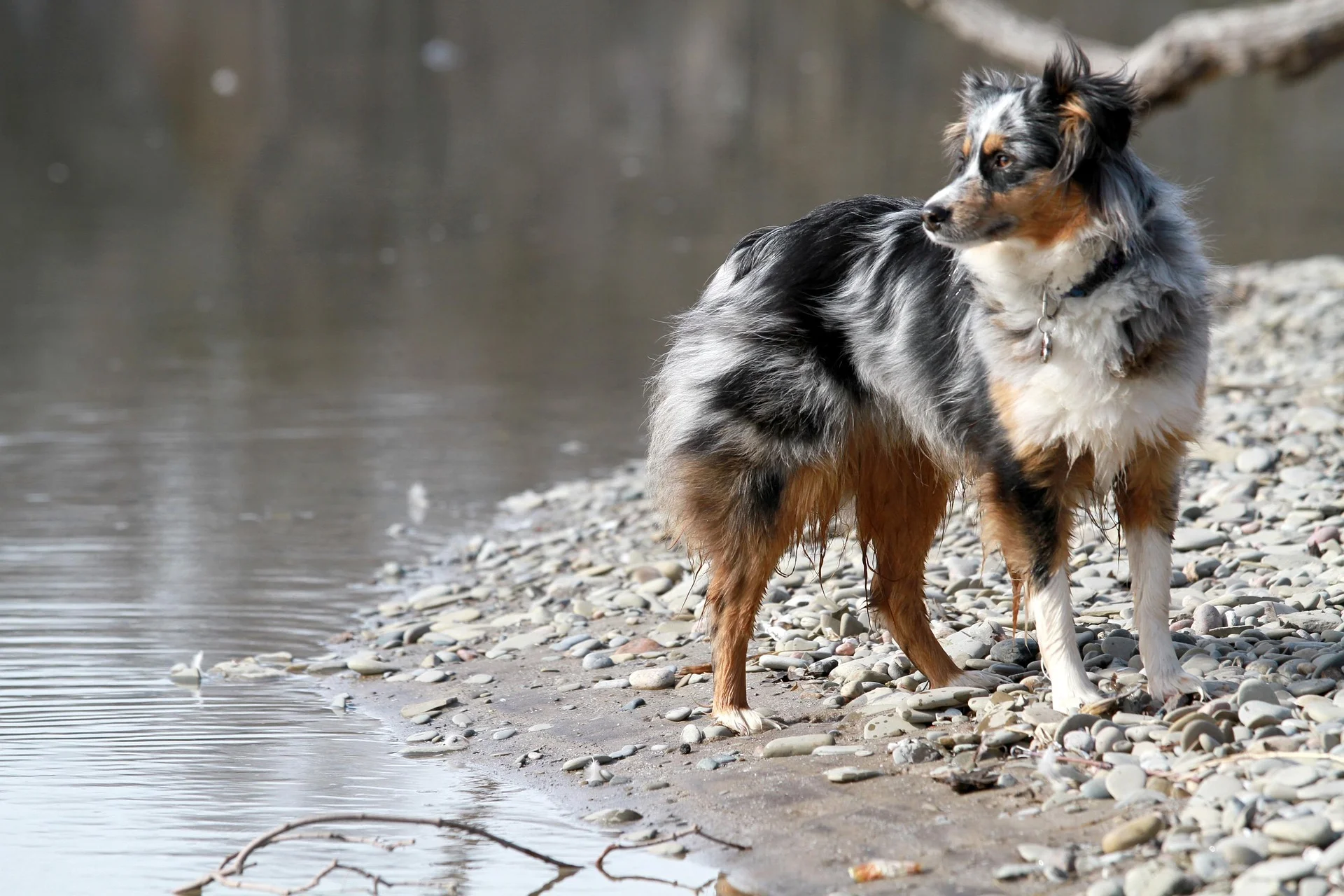
This is one of the most Googled questions about the breed, and the answer is simple: No. An Red Heeler and Blue Heeler are the same breed. The color is purely aesthetic. “Blue” occurs when black hairs are interspersed with white, creating a cool, speckled effect. “Red” is the result of liver or red pigment in the same pattern . Their temperament, health, and drive are identical.
Buying or Adopting: What to Look For
If you’ve decided you’re ready for the challenge, how do you find your companion?
- Working Lines vs. Show Lines: Dogs bred for working stock farms will have a much higher “drive” and energy level than those bred for conformation shows. Be honest about your lifestyle.
- Rescues: Don’t overlook rescues. Because they are high-energy, many Australian Cattle Dogs end up in shelters through no fault of their own.
- Australian Cattle Dog Rescue Association (ACDRA)
- Australian Working Dog Rescue Int (AWDRI)
Final Verdict: Are You “Cattle Dog” Material?
Living with an Australian Cattle Dog is a lifestyle, not just a choice. They are not for everyone.
- If you want a dog that sleeps on the couch all day, get a Greyhound.
- If you want a partner for every adventure who will never give up on you, challenge your mind, and guard your life with their own, get an Australian Cattle Dog.
They are the breed that will make you laugh, scream into a pillow, and wonder how you ever lived without that judgmental side-eye staring back at you.
Frequently Asked Questions
Do ACDs bark a lot?
They can be vocal, but it’s more than just barking. They “talk”—they grumble, groan, and make odd chirping sounds to communicate. Excessive barking is usually a sign of boredom .
Are they good with kids?
They can be, but only with early and consistent socialization. The biggest hurdle is the nipping instinct—they may try to herd small children by nipping at their heels. They are best suited to families with older, respectful children .
How long do they live?
They are a remarkably long-lived breed for their size. The average lifespan is 12 to 16 years, with some individuals living well into their teens . The oldest dog ever recorded, “Bluey,” was an Australian Cattle Dog who lived to be 29 years old .