
Dog Bite Training Made Simple: How to Teach Gentle Behavior Step by Step
Table of Contents
When most people search for “dog bite training,” they fall into two distinct camps: panicked puppy owners whose arms look like they’ve gone ten rounds with a cheese grater, or concerned guardians of adult dogs who have suddenly shown aggressive tendencies.
The truth is, dog bite training encompasses far more than just stopping unwanted nips. It’s a comprehensive approach to mouth-management that includes prevention, puppy development, and—for a select few—professional drive channeling. If you’re researching how to train a dog not to bite, you’ve likely experienced the frustration of those needle-sharp puppy teeth or the fear that accompanies an adult dog’s warning snap.
This guide will provide you with a clear blueprint for raising or rehabilitating a dog with a reliable, “soft-mouthed” approach to the world. We’ll explore the science behind stop dog biting training, decode canine body language, and give you actionable tools that work for both teething puppies and adult dogs requiring serious behavior modification.
Section 1: The Science of Bite Inhibition (Puppy hood)
If you’re raising a puppy under six months, your primary goal shouldn’t be to stop biting entirely—that’s biologically impossible for a teething dog. Instead, you need to focus on bite inhibition: the ability for a dog to control the pressure of their bite. This is the foundation of all effective dog bite training.
The Littermate Lesson
In a natural setting, puppies learn this from their littermates. When one puppy bites another too hard, the victim yelps and temporarily stops playing. This teaches the biter that hard bites = no more fun. Since you’ve removed your puppy from its litter, you now become the teacher.
The “Ouch” Method vs. The “Reverse Time-Out”
Many owners attempt to mimic the litter by yelling “Ouch!” when their puppy bites. But does this actually help with stop dog biting training?
- The “Ouch” Method: While this can work for sensitive, soft-natured breeds, it often backfires with high-drive puppies. A high-pitched yelp can sound like a squeaky toy, actually increasing arousal and leading to more biting. If you’re serious about how to train a dog not to bite, you need a more reliable approach.
- The Reverse Time-Out (The Gold Standard): This method is foolproof and should be your go-to technique in any dog bite training program. When those needle-sharp teeth make contact, don’t yell. Instead, calmly stand up, fold your arms, and step out of the room for 10-20 seconds, closing a baby gate or door behind you. You are removing what the puppy wants most: you. This teaches the puppy that biting results in the immediate removal of attention and fun. Consistency with this method is key to successful stop dog biting training.
The Critical Window: 8 to 16 Weeks
This period is the prime window for socialization and learning. Prioritize how to train a dog not to bite during these weeks by focusing on gentle hands and redirecting to appropriate toys. If you wait until the adult teeth come in at six months, you’ve missed a crucial opportunity for foundational dog bite training.
Section 2: The Dr. Ian Dunbar Bite Scale (A Diagnostic Tool)
Not all bites are created equal. To know how to respond, you must first understand the severity of the bite. This understanding is crucial for anyone pursuing dog bite training, whether for a puppy or an adult dog. Dr. Ian Dunbar’s Bite Scale is an invaluable tool for assessing risk and knowing when professional intervention is necessary.
| Level | Description | What It Means for Your Training |
|---|---|---|
| Level 1 | Air Snap / Pre-bite: The dog snaps but makes no contact. | This is a warning shot. The dog is highly stressed but still has inhibition. Your dog bite training should now focus on stress reduction and management. Never punish this warning. |
| Level 2 | Tooth Contact: Skin is touched but no puncture. Might leave bruising. | A highly inhibited bite. This is a serious warning that the dog is pushed to its limit. This is the moment to seek professional help with stop dog biting training before escalation occurs. |
| Level 3 | Single Puncture: Skin is punctured, but shallower than the canine tooth length. | The Wake-Up Call. This is a reportable bite in many areas. It indicates a failure in bite inhibition. Your DIY dog bite training ends here. You now need a certified behavior consultant. |
| Level 4 | Deep Puncture: Puncture deeper than the canine tooth or tearing. | Danger Zone. This indicates a dog that lacks significant bite inhibition. This goes beyond standard how to train a dog not to bite protocols. You need a Veterinary Behaviorist immediately. |
| Level 5-6 | Multiple Bites / Fatality: Multiple deep bites or death. | These tragic cases require life-long management by professionals. Prevention through early dog bite training is the only solution. |
Section 3: Bite Prevention & Reading the “Silent” Language
The secret to effective dog bite training isn’t just about teaching the dog; it’s about teaching you to listen. Bites are almost always the last resort after a dog has given multiple stress signals that humans miss. If you want to master how to train a dog not to bite, you must first learn to read these cues.
The Stress Ladder (Identify Triggers Before the Bite)
Before any dog bite training can be effective, you need to recognize when your dog is uncomfortable. These are the warning signs that precede every bite:
- Level 1 (Mild Discomfort): Lip licking (when not eating), yawning (when not tired), turning the head away. These are appeasement signals. If you see these during your stop dog biting training exercises, you’re pushing too hard.
- Level 2 (Anxious): Whale eye (looking sideways while head is turned, showing the whites of their eyes), tucked tail, pinned ears. This is your dog saying, “I’m really uncomfortable with this situation.”
- Level 3 (Critical – The “Freeze”): The dog goes completely stiff and still. This is the most dangerous moment before a bite. It means the dog is done communicating and is about to act. Any dog bite training program must teach you to recognize this moment and de-escalate immediately.
The 3-Second Rule for Greetings
When introducing your dog to strangers, especially if you’re working on stop dog biting training for a fearful dog, keep greetings brief. Allow the stranger to greet for only three seconds, then call the dog away for a treat. This prevents the dog from feeling trapped and reduces the risk of fear-based bites.
Environment Management
Use baby gates and crates not as punishment, but as safety tools during your dog bite training journey. If your dog is stressed by a visitor, allowing them to retreat to a “safe space” prevents bites and teaches the dog they don’t have to confront their fears head-on. This is management, not a failure in training.
Section 4: Professional Bitework & Protection Training
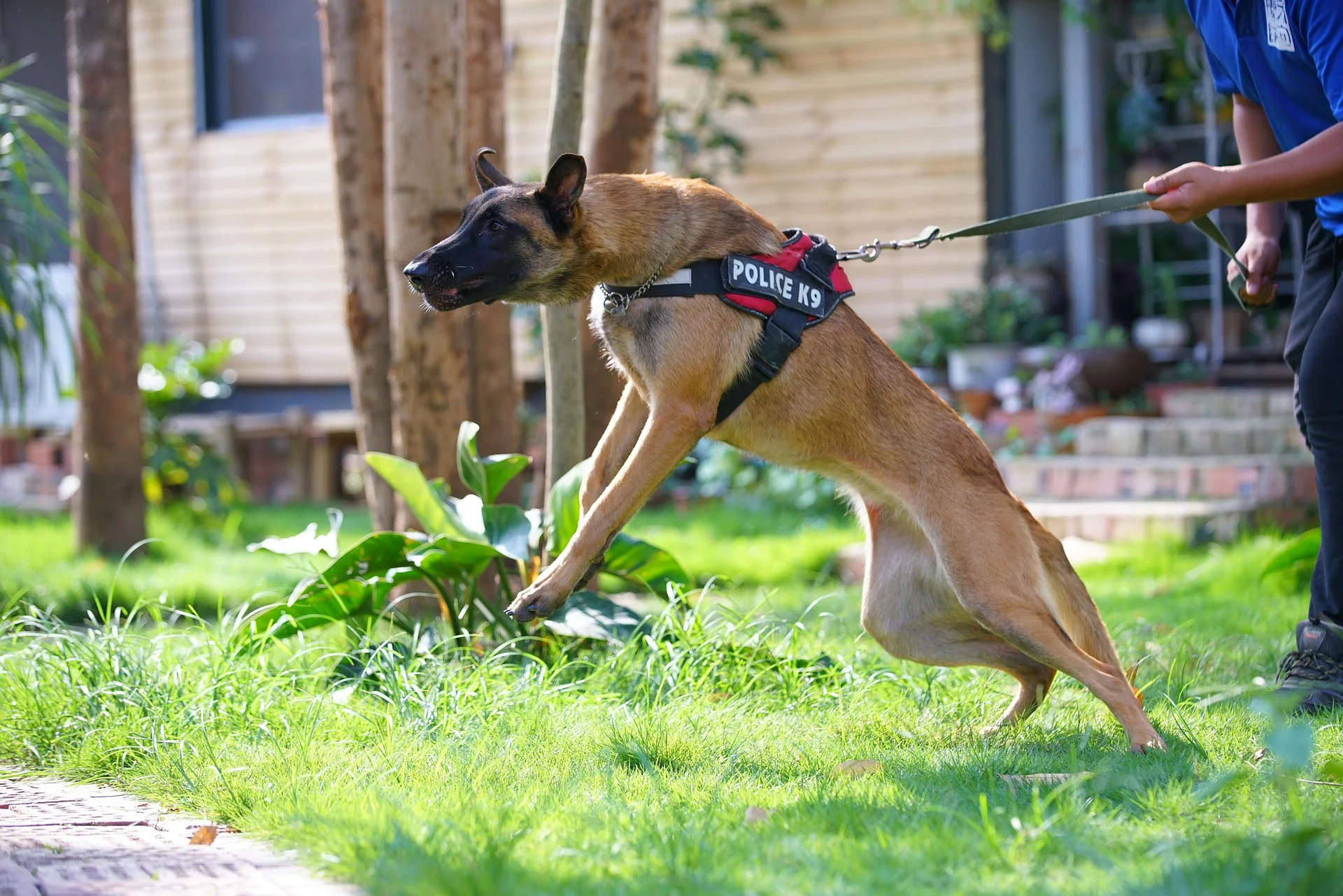
For the average owner, teaching a dog to bite on command is a dangerous path and completely unrelated to standard dog bite training. However, for those involved in sports like IGP or PSA, dog bite training takes on a professional dimension that requires understanding.
Sport vs. Aggression
It is vital to distinguish between Prey Drive and Defensive Aggression when considering advanced dog bite training:
- Prey Drive (Sport): The dog sees the bite sleeve as a toy. The dog is happy, wagging its tail, and working for the “catch.” This is a game built on solid foundational how to train a dog not to bite principles—the dog must first learn tremendous impulse control.
- Defense (Aggression): The dog is fearful, anxious, and biting to make a threat go away. This is not a game and indicates a failure in early stop dog biting training.
The Power of the “Out”
A protection dog is only as good as its ability to let go. The “Out” or “Drop It” command is the most critical command in professional dog bite training. It signifies that the dog is under complete emotional control, even in a state of high arousal.
A Word of Caution:
Never attempt DIY protection training. Using a bite pillow or sleeve incorrectly can undo years of stop dog biting training and create a dog that practices biting people but has no “off switch.” This is a liability nightmare. Always seek a certified club that prioritizes foundational obedience and impulse control before any bite work begins.
Section 5: The Safety Toolkit (Missing on Other Sites)
This section addresses what most dog bite training resources ignore: responsible ownership tools that protect both your dog and the public.
Muzzle Training 101: Why Every Dog Needs It
Even the friendliest dog can bite when it is in extreme pain. A dog with a broken leg at the vet is a prime candidate for a fear bite. All dogs should be trained to wear a basket muzzle. This isn’t a failure of your dog bite training; it’s responsible management. Unlike the nylon muzzles that restrict breathing, a basket muzzle allows the dog to pant, drink, and take treats.
How to Make a Muzzle Fun (Positive Association)
If you’re wondering how to train a dog not to bite the muzzle or fear it, follow this protocol:
- The Peanut Butter Trick: Fill the tip of the basket muzzle with peanut butter or cream cheese. Let your dog lick it out. Repeat until they shove their nose in eagerly.
- The Buckle: Once they are happy putting their nose in, gently do up the strap for one second, then remove it and reward. Gradually increase the time.
- Pair with Great Things: Only bring out the muzzle for amazing things—walks, car rides, special treats. This positive association is essential stop dog biting training for emergency preparedness.
Legal & Liability: The “One-Bite Rule”
Legally, many jurisdictions operate under a “one-bite rule” regarding dog bite training incidents. If your dog has delivered a Level 3 bite or higher, you are now liable for knowing your dog is dangerous. This means your dog bite training must now include 100% management to prevent future incidents, or you face severe legal consequences. Understanding this liability is as important as understanding how to train a dog not to bite.
Section 6: When to Call a Professional
Knowing when you’re out of your depth is the sign of a great dog owner. Not all situations can be resolved with basic dog bite training techniques.
Red Flags: When Training Turns to Rehabilitation
- The dog has delivered a Level 3 bite or higher despite your stop dog biting training efforts.
- The dog freezes and growls over food, beds, or toys (resource guarding escalating to biting).
- The dog has bitten a family member “out of nowhere” (there is always a warning; you just missed it).
- Your attempts at how to train a dog not to bite have made the behavior worse.
How to Choose a Trainer
Do not hire a trainer who uses prong or shock collars for aggression. For true bite cases, aversive tools can push the dog over threshold and make the aggression worse, undoing any progress you’ve made with positive dog bite training. Look for these credentials:
- LIMA-based Trainers: (Least Intrusive, Minimally Aversive) practitioners who prioritize the dog’s emotional wellbeing.
- IAABC (International Association of Animal Behavior Consultants): Certified consultants who specialize in aggression cases that go beyond basic stop dog biting training.
- DACVB (Diplomate of the American College of Veterinary Behaviorists): A veterinarian who specializes in behavior and can prescribe medication if needed, working alongside your dog bite training efforts.
Conclusion: A Lifetime of Mouth Management
Dog bite training is not a one-time class or a quick fix; it is a lifelong commitment to communication and management. From teaching a 10-week-old puppy that human skin is delicate, to managing an adult dog’s stressors, to respecting the power of their jaws—your role is to be your dog’s advocate.
By understanding the science of bite inhibition, learning to read their silent language, and knowing when professional help is needed, you build a relationship based on trust rather than fear. Whether your goal is peaceful cuddle sessions on the couch or competitive protection sports, a dog with a well-managed mouth is a dog that can safely navigate the human world.
Remember these key takeaways for your dog bite training journey:
- For puppies: Master the Reverse Time-Out. It’s the most effective stop dog biting training tool you have.
- For adults: Learn to read the Stress Ladder. Prevention is always better than reaction.
- For everyone: Muzzle train your dog. It’s not a punishment; it’s peace of mind.
- For serious cases: Call a professional immediately. The best how to train a dog not to bite protocol involves knowing when you need help.
What’s your next step? If you have a puppy, start with the Reverse Time-Out today. If you have an adult dog showing any Level 1 or 2 stress signals, practice the Muzzle Targeting game. And remember, when in doubt, a certified professional is your best resource for a safe and happy life together. Your commitment to proper dog bite training today ensures a safer tomorrow for everyone.