
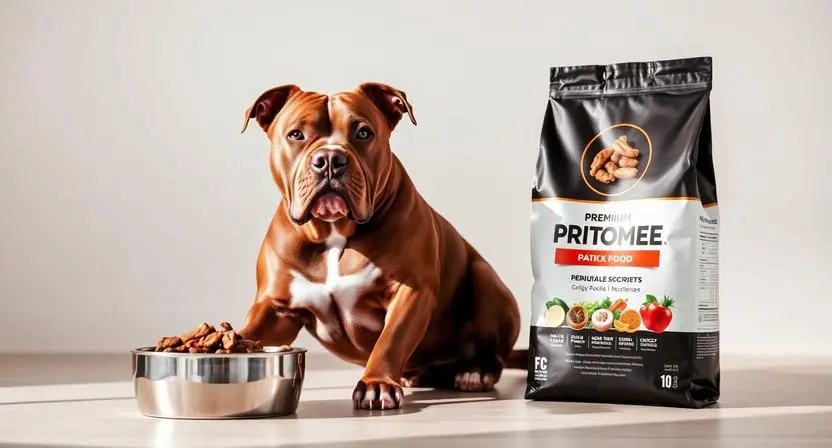
Best Dog Food for Pitbulls In 2025
Table of Contents
Introduction
Finding the best dog foods for Pitbulls isn’t as simple as grabbing the highest protein bag off the shelf. Pitbulls—whether you call them American Staffordshire Terriers, American Bullies, or APBTs—are the ultimate contradiction: they’re muscular athletes with surprisingly sensitive systems. These powerful dogs need food that fuels their incredible strength while avoiding the skin allergies and digestive issues that plague the breed.
We analyzed ingredient labels, recall histories, and veterinary guidelines to find the best dog foods for Pitbulls that supports muscle mass without triggering the dreaded “Pitbull itch.”
Quick Navigation:
- Top 5 Foods at a Glance
- Nutritional Science Guide
- Detailed Reviews
- Puppy Feeding Guide
Quick Summary: The Top 5 Foods at a Glance {#quick-summary}
| Category | Food Recommendation | Key Benefit | Main Ingredients |
|---|---|---|---|
| Best Overall (Muscle) | Purina Pro Plan Sport | 30/20 Ratio for Energy | Chicken, Rice, Beef Fat |
| Best for Allergies | Open Farm Wild-Caught Salmon | No Chicken/Beef (Hypoallergenic) | Wild Salmon, Quinoa |
| Best Budget | Diamond Naturals Beef Meal | High Protein, Low Cost | Beef Meal, Rice |
| Best Fresh Food | The Farmer’s Dog Turkey | Customized for Skin/Digestion | Human-Grade Turkey |
| Best for Puppies | Taste of the Wild High Prairie Puppy | DHA for Brain Development | Bison, Venison, Sweet Potato |
The 3 Pillars of Pitbull Nutrition (What Science Says) {#nutrition-pillars}
1. The 30/20 Rule for Muscle Mass
Pitbulls have faster metabolisms than many other breeds due to their muscle density. A couch-potato Labrador might thrive on 26% protein, but an active Pitbull needs more fuel to maintain that trademark physique.
The ideal ratio: 30% protein minimum (for building and maintaining muscle) and 20% fat (for sustained energy and calorie density).
This isn’t about making your dog “bulky”—it’s about meeting their biological needs. Insufficient protein forces the body to cannibalize existing muscle tissue, while adequate fat provides the caloric density these high-energy dogs require.
Keyword tip: When searching for the best dog food for Pitbulls, look for “high protein dog food for Pitbulls” or “performance dog food” labels.
2. Combating “The Itch” (Skin & Coat Health)
If you own a Blue Nose or Red Nose Pitbull, you’ve probably dealt with the constant scratching, hot spots, or paw licking. These color variations are particularly prone to skin sensitivities, but all Pitbulls can experience allergic reactions.
Essential fatty acids are non-negotiable:
- Omega-3 (from fish oil or flaxseed) reduces inflammation
- Omega-6 (from chicken fat or sunflower oil) supports skin barrier function
- Look for a ratio of approximately 5:1 to 10:1 (omega-6 to omega-3)
Common allergen triggers to watch for:
- Chicken (the #1 culprit in Pitbull food allergies)
- Beef (second most common)
- Corn, wheat, and soy fillers
If your dog has chronic skin issues, consider a novel protein source like salmon, duck, lamb, or even kangaroo. Many owners searching for the best dog food for Pitbulls with allergies find that switching proteins solves the problem entirely.
3. Joint Support for Power Breeds
Pitbulls are genetically predisposed to hip dysplasia and ACL tears due to their muscular build and active lifestyle. Their powerful bodies put extra stress on joints, especially during high-impact activities like jumping or sudden directional changes.
Look for guaranteed analysis levels of:
- Glucosamine: 400+ mg/kg minimum
- Chondroitin: 300+ mg/kg minimum
These compounds support cartilage health and can slow joint degradation. Many premium foods include these supplements, but you can also add them separately if your budget option falls short.
The Grain-Free Controversy: Should Pitbulls Eat Grains?
Let’s address the elephant in the room: grain-free dog foods became trendy, then controversial. When choosing the best dog food for Pitbulls, many owners assume grain-free is automatically better—but that’s not always true.
The FDA warning: Between 2014-2019, the FDA investigated a potential link between grain-free diets and dilated cardiomyopathy (DCM), a serious heart condition. The concern centered on foods using peas, lentils, and potatoes as primary carbohydrate sources instead of grains.
The verdict for Pitbulls: Grain-inclusive foods (with rice or oats) are the safest default unless your dog has a diagnosed grain allergy (which is actually quite rare). Grains provide fiber, B-vitamins, and don’t trigger the allergic reactions most owners mistakenly attribute to them.
If you must go grain-free:
- Avoid foods where peas, lentils, or potatoes appear in the first 3 ingredients
- Choose sweet potato or chickpeas instead
- Consider adding taurine supplements (consult your vet)
The reality: most Pitbull skin issues stem from protein sources (chicken/beef), not grains.
In-Depth Reviews: Best Dog Foods for Pitbulls
Now let’s dive into our top recommendations. Each of these represents the best dog foods for Pitbulls in different categories, from muscle building to allergy management.
1. Best Overall for Muscle & Performance: Purina Pro Plan Sport
Why we picked it: Backed by decades of canine nutrition research, this formula delivers the 30% protein and 20% fat ratio that active Pitbulls need. The company employs veterinary nutritionists and conducts feeding trials—not just theoretical formulations.
Key Ingredients:
- Real chicken (primary protein)
- Rice and oat meal (digestible carbs)
- Fish oil (omega-3 source)
Pros:
- High calorie density (475 kcal/cup) for muscle maintenance
- Widely available at most pet stores
- Strong reputation with working dog handlers
Cons:
- Contains chicken (common allergen for Pitbulls)
- Not suitable for low-activity dogs (too calorie-dense)
Ideal for: Active adult Pitbulls without chicken sensitivities, working dogs, or athletic companions.
2. Best for Skin Allergies & Sensitive Stomachs: Open Farm Wild-Caught Salmon
Why we picked it: Novel protein sources reduce the likelihood of allergic reactions. Salmon provides complete amino acids plus built-in omega-3s for skin health—killing two birds with one stone.
Key Ingredients:
- Wild-caught salmon (primary protein)
- Ocean whitefish (complementary protein)
- Quinoa and pumpkin (gentle carbs)
Omega fatty acid count: Approximately 1.2% omega-3, 3.5% omega-6 (excellent for coat health)
Pros:
- No chicken, beef, or corn
- Visibly shinier coat within 4-6 weeks
- Smaller, firmer stools (better nutrient absorption)
Cons:
- Higher price point ($3-4/lb vs. $1.50-2/lb for standard kibble)
- Strong fish smell (some dogs love it, some owners don’t)
Ideal for: Blue Nose Pitbulls, dogs with chronic rashes, paw licking, or ear infections.
3. Best Value (Budget-Friendly): Diamond Naturals Beef Meal & Rice
Why we picked it: Delivers solid protein content (32%) without the premium price tag. Diamond uses beef meal as the first ingredient—a concentrated protein source that’s more nutrient-dense than fresh beef.
Key Ingredients:
- Beef meal (primary protein)
- Rice and cracked pearled barley
- Egg product (highly digestible protein)
Pros:
- Affordable ($40-50 for 40 lbs)
- No corn, wheat, or soy
- Family-owned company with good transparency
Cons:
- Lower glucosamine levels (200 mg/kg—you may need to supplement)
- Some dogs experience loose stools during transition
Ideal for: Budget-conscious owners with healthy adult Pitbulls who want quality nutrition without premium prices. This is often considered one of the best dog food for Pitbulls options when balancing cost and quality.
4. Best Fresh Food (The “Topper” Option): The Farmer’s Dog Turkey Recipe
Why we picked it: For Pitbulls with severe digestive distress or extreme picky eating, fresh food can be transformative. This subscription service uses human-grade ingredients and customizes portions based on your dog’s age, weight, and activity level.
Key Ingredients:
- USDA turkey (human-grade)
- Sweet potato, carrots, spinach
- Sunflower oil and fish oil blend
Pros:
- Gently cooked (preserves nutrients better than kibble extrusion)
- No preservatives or synthetic vitamins
- Can help identify specific allergens through elimination
Cons:
- Expensive ($3-8/day depending on dog size)
- Requires significant freezer space
- Not practical for travel
Ideal for: Dogs with chronic vomiting, diarrhea, or owners willing to invest in premium nutrition.
5. Best for Puppies: Taste of the Wild High Prairie Puppy
Why we picked it: Pitbull puppies need controlled calcium and phosphorus levels to support healthy bone growth without accelerating it too quickly (which increases hip dysplasia risk). This formula balances growth nutrients with DHA for brain development.
Key Ingredients:
- Bison and venison (novel proteins)
- Sweet potato (gentle carb)
- DHA from salmon oil
Pros:
- Grain-free without heavy legume content
- Probiotics for developing digestive systems
- 28% protein (appropriate for growing puppies)
Cons:
- Some puppies may be sensitive to bison
- Grain-free (see controversy section above)
Ideal for: Pitbull puppies 8 weeks to 12 months old.
Pitbull Puppy Feeding Guide: Growing a Beast
The Growth Timeline
2–4 Months: Rapid Skeletal Growth
- Focus: Calcium and phosphorus balance (1.2% calcium, 1.0% phosphorus)
- Why it matters: Too much calcium accelerates bone growth faster than soft tissue can support, increasing dysplasia risk
- Feeding frequency: 4 meals per day
4–12 Months: Muscle Filling Out
- Focus: Controlled calories with adequate protein
- Why it matters: Pitbulls gain muscle mass more easily than other breeds—don’t overfeed
- Feeding frequency: 3 meals per day (down to 2 after 6 months)
How Much to Feed? (Daily Portions)
| Puppy Weight | Age 2-4 Months | Age 4-6 Months | Age 6-12 Months |
|---|---|---|---|
| 10-20 lbs | 1.5-2 cups | 2-2.5 cups | 2.5-3 cups |
| 20-30 lbs | 2-3 cups | 3-3.5 cups | 3.5-4 cups |
| 30-40 lbs | 3-4 cups | 4-4.5 cups | 4-5 cups |
| 40-50 lbs | 4-5 cups | 5-5.5 cups | 5-6 cups |
Note: Adjust based on body condition. You should be able to feel ribs easily but not see them prominently.
Warning: Avoid “Dirty Bulking”
Some owners try to create a massive, heavily muscled Pitbull by overfeeding or using cheap “weight gainer” supplements. This is dangerous and cruel.
The risks:
- Excess weight stresses developing joints (hello, early arthritis)
- Increases hip dysplasia severity
- Heart strain in an already muscular breed
- Shorter lifespan
A healthy Pitbull puppy should look lean and athletic, not stocky. Muscle development happens naturally with proper nutrition and exercise—you can’t shortcut genetics.
Frequently Asked Questions (FAQ)
Chicken vs. Beef: Which is better for Pitbulls?
Answer: Both are high-risk allergens for Pitbulls. If your dog tolerates either without issues, they’re excellent protein sources. However, if you’re dealing with skin problems or digestive upset, switch to a novel protein like lamb, salmon, duck, or venison. These proteins are less commonly used in commercial foods, meaning your dog is less likely to have developed a sensitivity to them.
Do Pitbulls need large breed dog food?
Answer: Pitbulls are technically medium-large dogs (30-65 lbs), but the distinction matters less than nutrient density. Large breed formulas focus on controlled calcium for giant dogs (Great Danes, Mastiffs) to prevent skeletal issues. For Pitbulls, look for:
- As adults: 25-30% protein, 15-20% fat
- As puppies: Calcium under 1.5%, phosphorus under 1.2%
Kibble size is mostly a marketing feature—nutritional content is what counts.
Why does my Pitbull have such bad gas?
Answer: Two main culprits:
- Eating too fast: Pitbulls have brachycephalic (flat-faced) traits from their bulldog ancestry. This causes them to gulp air while eating. Solution: Use a slow-feeder bowl or puzzle feeder.
- Poor quality fillers: Corn, wheat, and soy are difficult to digest and ferment in the gut. Solution: Switch to a food with named meat sources and whole grains (rice/oats) or grain-free alternatives like sweet potato.
Also check for food intolerance—excessive gas often accompanies allergies.
Final Thoughts
Choosing the best dog foods for Pitbulls requires balancing three priorities: muscle maintenance, skin health, and joint support. While premium options like fresh food deliver undeniable benefits, even budget-conscious owners can find the best dog food for Pitbulls by focusing on protein sources, avoiding common allergens, and supplementing where necessary.
Pay attention to your individual dog—shiny coat, consistent energy, and healthy stools are your best indicators that you’ve found the right food. The best dog food for Pitbulls is ultimately the one your specific dog thrives on. When in doubt, consult your veterinarian, especially if your Pitbull has chronic health issues.
Your muscular companion deserves fuel that matches their incredible athleticism—without the itching, scratching, and digestive drama.